Every group you cannot split sets a floor before anything else
A table is not just a number of chairs — it is a set of relationships that have to coexist for the length of a meal. Before you decide how many tables you want, or what shape they are, or how the room lays out, you need to know the minimum viable size of every group that must sit together. Those minimums are the real constraints. Everything else is preference.
Think of it in graph terms: each guest is a node, and every "must sit with" relationship is a required edge. When you trace those edges, you find clusters of people who are already bound to each other before you have placed a single name card. In graph theory these are called connected components — discrete subgraphs with no edges crossing between them. In plain terms: a family of seven who will not be separated is a component of seven. They establish a floor of seven chairs at whatever table they land on.
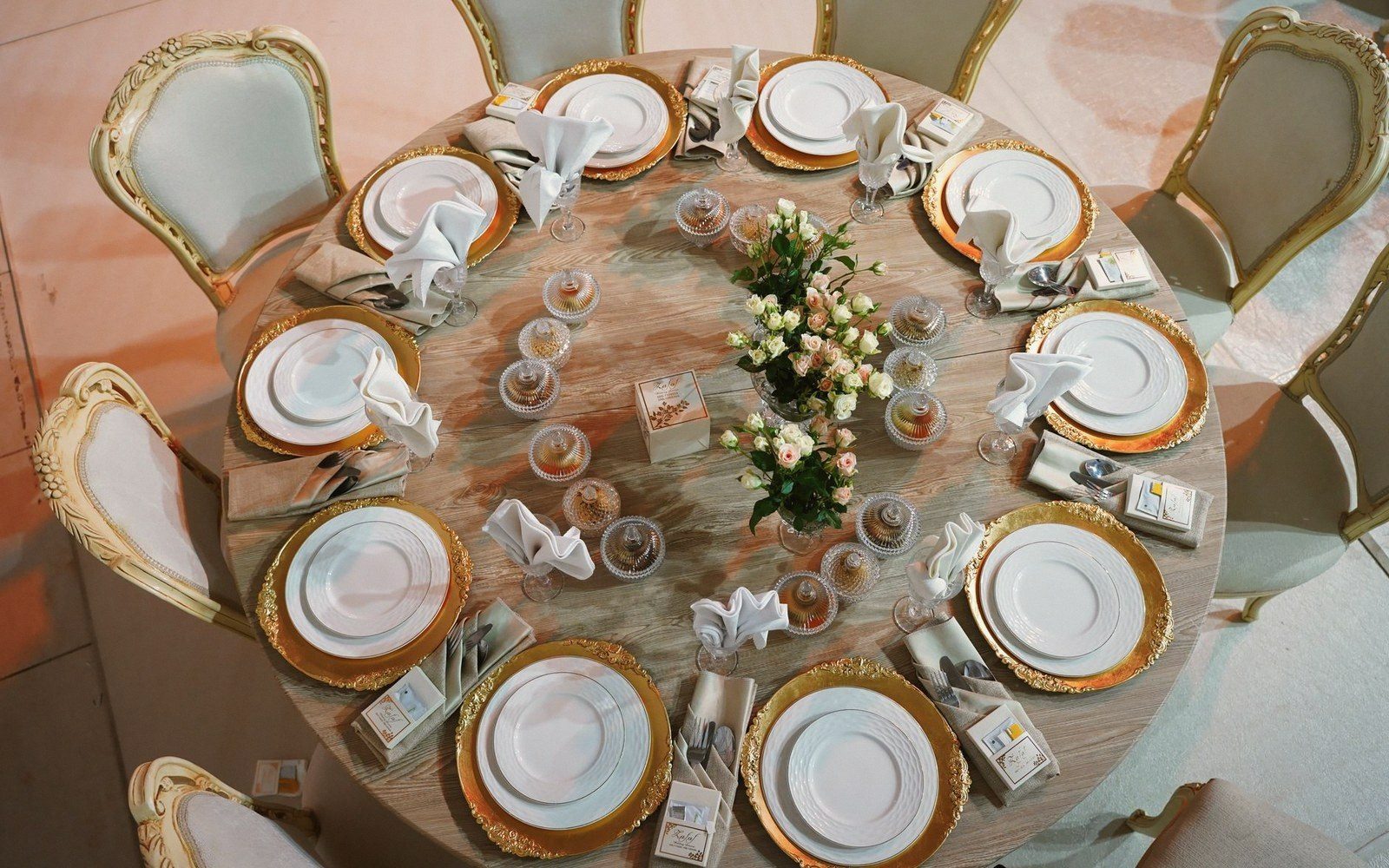
This matters because tables have ceilings too. A round eight seats eight. A round ten seats ten, but starts to break conversation across the diameter. So the moment you identify a component of nine, you have a table that cannot be a round eight. The component has already decided the table size. You are just catching up with it.
The practical move is to map your components before you open a seating tool or sketch a layout. List every "must sit together" cluster — children with parents, a wheelchair user who needs an end position and a carer beside them, the group of old friends who travelled from abroad and will feel marooned if separated. Give each cluster a number. The largest number in any cluster is the minimum size of at least one table. If two clusters are nearly the same size and you suspect they would combine naturally, note that too — combined components set a combined floor.
What catches people out is the assumption that they can smooth things over later. They lay out tables in round tens, then discover an extended family of thirteen, and suddenly a table has to grow or split. Splitting a connected component is exactly what the constraint said not to do. Growing the table may mean reordering the whole seating plan as a graph, because adjacent tables now have fewer chairs available for the guests who would have filled them.

Components also expose a subtler problem: a very large one — say, a family of fifteen — may not be satisfiable at a single table at all, in which case you need to find the cut that does least damage. Finding that out early, before the layout is fixed, is worth considerably more than finding it the week before the wedding.
Map the components first. The tables follow from them.