
What the cutter can and cannot move
A wedding dress is, before any fitting, a hypothesis. The sample arrives cut to a standard block, and the block is nobody's actual body. It is an averaged set of proportions that allows a factory or atelier to produce a garment efficiently. The fitter's job is to reconcile it to a real person, and that process has hard limits.
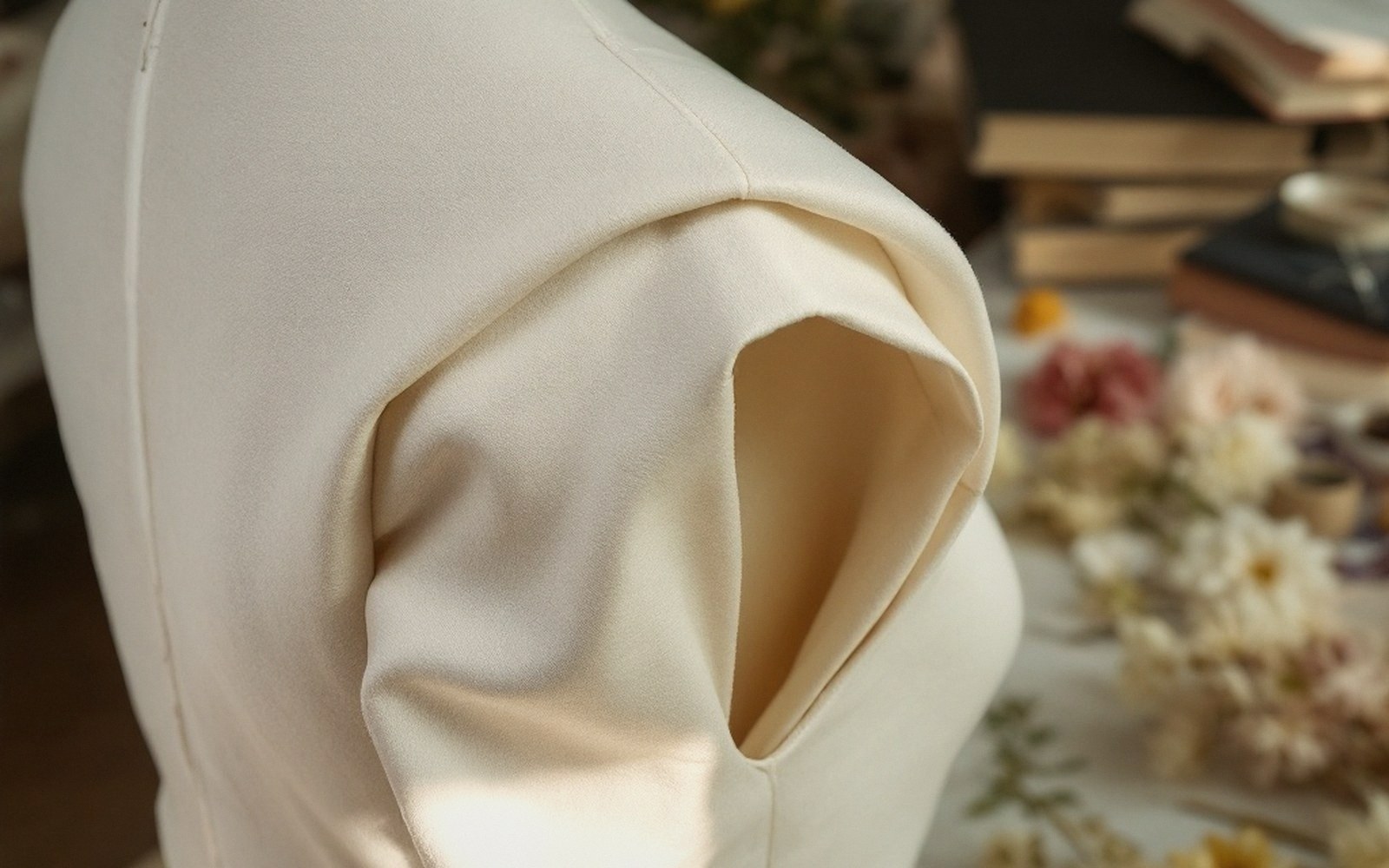
The limits are architectural. Shoulders and armholes set the garment: the scye — the armhole's technical name — is sewn at a fixed angle, and moving it means recutting the bodice from the top. Reputable fitters won't touch it, and with good reason; a botched armhole migrates forward into the chest or back into the blade and the whole silhouette reads wrong in photographs even when it is difficult to say why. The shoulder seam must sit at the break of the shoulder, and if the sample's shoulder is set wrong for your frame, that is the single most consequential issue to raise at the first fitting.

Everything lower is more negotiable. The side seams are where volume is added or removed; letting them out is possible only if the seam allowance is there — typically two centimetres in a well-made dress, sometimes less in a fast-fashion gown. Taking them in is almost always achievable. Darts can be added, moved, or suppressed to account for a longer or shorter back, a fuller bust, or a waist that sits higher than the pattern anticipated. A neckline can be raised or lowered within the facing. Straps can be shortened. Boning can be repositioned.
What looks like a lot of fabric is often less than it appears, especially in dresses with structured underlayers. A fitter will pull the back lacing tight and assess what the body of the gown tells them, not what the surface drama suggests. Ask, early, what the actual seam allowance is. The number matters more than reassurance.
The order of decisions, and why hem comes last
Fittings have a sequence for good reason. Structural changes — shoulder position, side seam volume, bodice fit — come first, because they determine where the dress sits on the body. If you adjust the hem before the bodice is settled, you are hemming a garment that will ride differently once the torso alterations are complete. The hem will be wrong, and the work will be done again.
The order of fittings runs: fit the body, then the length, then the detail. Beading or lace at the hem's edge is finished last of all, because it is glued, hand-sewn or reattached after the raw hem is cut, and that work cannot be undone cleanly if the length changes.

The instruction that gets repeated so often it has become a trade truism: bring the shoes. Not shoes of a similar heel height. The actual shoes, because two centimetres of difference in heel is two centimetres of difference at the hem, and a dress that grazes the floor perfectly in bare feet will trip you in a block heel or gap embarrassingly with a low kitten. The measurement is taken with you standing, weight through your feet, in the shoes you will wear on the day. Hem in the shoes is not a stylistic preference — it is an accurate measurement versus an inaccurate one.
Allow for a minimum of two fittings in any realistic schedule, and three if the alterations are structural. The first pins and assesses; the second confirms the corrections; the third, where needed, is a final check before the gown leaves the workroom. Each fitting should be separated by enough time for the seamstress to complete the work — a week is a minimum for most ateliers, longer in peak season between April and September. Book the last fitting no closer than two weeks before the wedding: close enough that your body is not going to change significantly, far enough that a problem can be corrected without emergency pricing.
The sample size got you into the room. The fittings are where the dress is actually made.