
Why sequence is everything in a bridal fitting
A wedding dress reaches you in a sample size or a made-to-order shell that approximates your measurements. Either way, it needs work. The mistake most people make — and most good seamstresses spend time unpicking — is believing the fittings are interchangeable. They are not. Each appointment resolves one class of problem, and that class must be stable before the next can begin.
The first fitting addresses structure: the bodice, the back closure, the side seams. These are the decisions that govern every other adjustment on the garment. If the back needs to come in two centimetres, the side seams follow. If the shoulder is sitting wide — and it nearly always is on a sample — correcting it pulls the neckline, which changes where the boning sits, which affects how the bust panel lies. None of that can be finished while anything above the waist is still moving. As what cannot be moved makes clear, the shoulder and armhole set the garment; almost everything else is downstream of them.
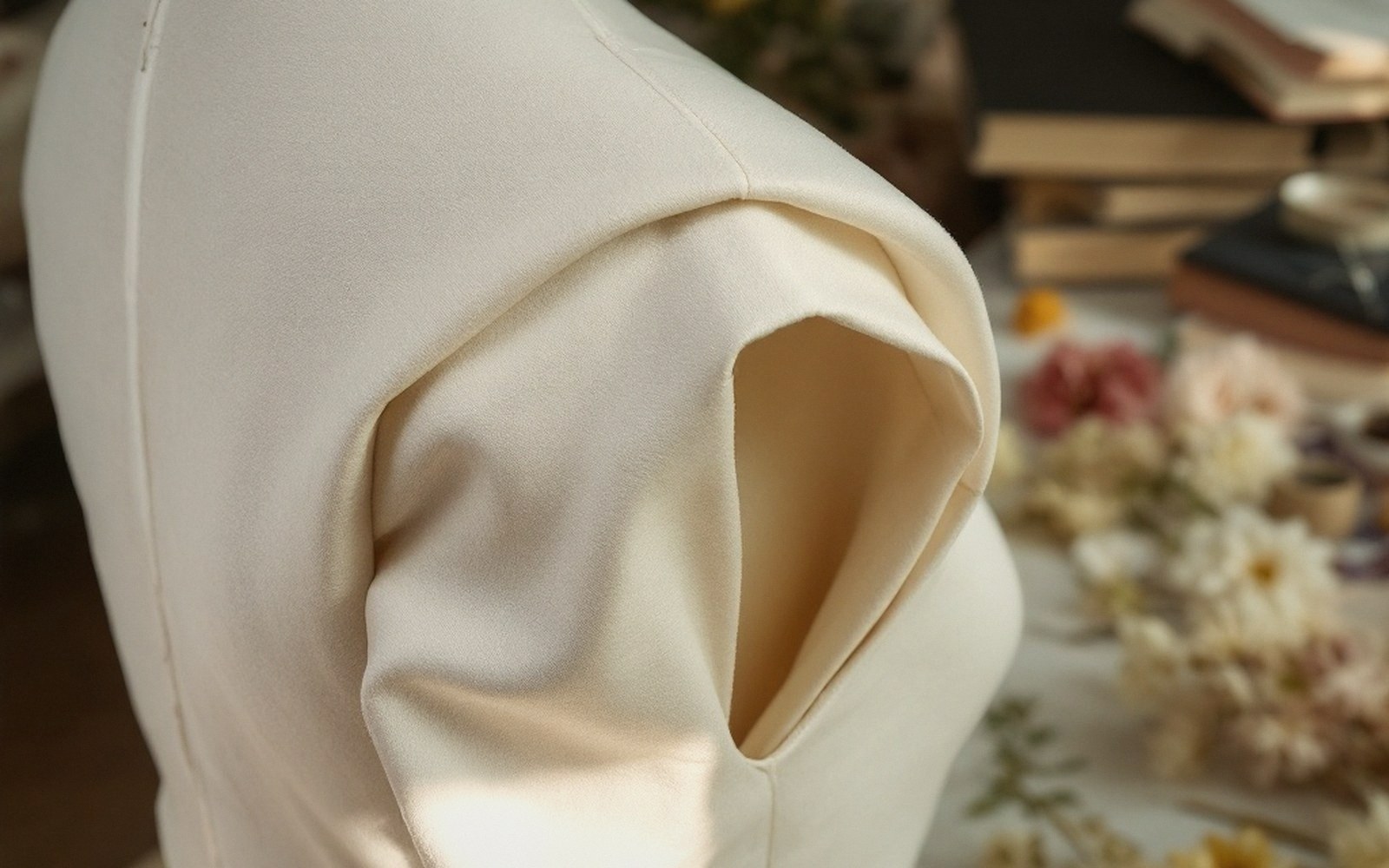

The second fitting confirms that the structural work held and adds the next layer: the bustle, the zipper or corset conversion, the bra cups if they are being built in. A good seamstress will also pin the hem at this point — not cut it, pin it. The hem is a measurement, and that measurement requires the shoes you will wear on the day, the exact undergarments, and someone standing where the guests will stand to check the sweep from the back. If you have not yet decided on shoes, the hem cannot be decided either. Skipping the shoe rule is the single most common reason a hem comes back to the table, as hem in the shoes covers in detail.
The third fitting — often the final one — finishes the hem, attaches any detachable elements such as a train or an overskirt, and checks the complete silhouette under the kind of light you will actually wear it in. This is also when buttons are covered, loops are positioned, and any last-minute weight changes (real ones, not hoped-for ones) are absorbed. No new structural work should begin here. If it does, you need a fourth fitting, and the timeline may not accommodate one.
The logic is the same logic as any construction project: foundations, frame, finish. The dress does not care that the wedding is in six weeks. It will take as many fittings as the order of work demands, and rushing the sequence does not compress time — it creates rework.
Book the fittings in order. Bring the shoes to the second one.